

Why Are They Banning Mobile Phones?
Why Schools are Banning Mobile Phones and What You Need to Know
You might have caught wind of the new guidance from the government in the news or through other parents, but what’s the fuss about? The guidance says that the government backs headteachers who choose to ban mobile phones from the school premises from Feb 19 2024. Is your headteacher clamping down on phone use, and what does it mean for your child? Let’s break it down.
 Firstly: Why are schools banning mobile phones? Well, it turns out there’s a lot more to it than just a knee-jerk reaction to the latest tech craze. In fact, researchers like Anderson and Jiang have been shedding light on the impact of excessive screen time on children’s mental health.
So, what’s a concerned parent to do? Here’s what you need to know:
Teachers have the authority to confiscate mobile phones in schools from your child, so it is important to be aware of this. If you child needs a phone for essential communication outside schools, you may need to make an arrangement with the school. Many schools allow children to drop off their phone at the beginning of the school day at the school office.
1. **Distraction Detox:** One of the primary reasons schools are banning mobile phones is to minimise distractions in the classroom. It’s no secret that a buzzing phone can derail even the most focused student. By limiting phone use during school hours, educators hope to create a more conducive learning environment.
2. **Social Connection vs. Social Media:** Many teachers have noticed that heavy screen use has reduced children’s ability to communicate face to face. They are reading less and are poorer at explaining and describing. It has been suggested that children (and adults) are now more use to showing each other images, rather than describing events or ideas. It is easier to show each other funny memes that tell each other funny jokes.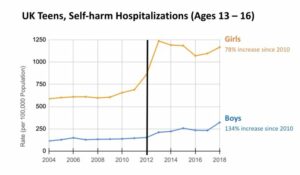
3. **Digital Detox Benefits:** There is now a great deal of evidence that heavy Social Media use has a negative impact on metal health, especially in girls. As girls are very socially aware and sensitive to social status, the contstant comparison and perfected images on sites like Instagram can anxiety inducing. In fact Facebook’s own research showed this! By encouraging students to disconnect during school hours, educators are promoting healthier habits and teaching valuable life skills for managing screen time responsibly.
Haidt, a social psychologist and author, has highlighted the detrimental effects of constant smartphone use on young minds. From increased anxiety and depression to decreased attention spans and social skills, the evidence is mounting against unrestricted phone access for kids.
In conclusion, the decision to ban mobile phones in schools isn’t about demonising technology but rather about promoting a healthier relationship with it. By working together with educators and taking proactive steps to manage screen time, we can help our children thrive both in and out of the classroom.
So, the next time you hear about your child’s school implementing a mobile phone ban, remember that it’s not about restricting freedom but about creating a better learning environment for everyone. Let’s embrace the opportunity to disconnect, engage, and prioritise our children’s well-being in this digital age.